AC Freezing Up: Frozen Evaporator Coil or Ice on the Line Outside
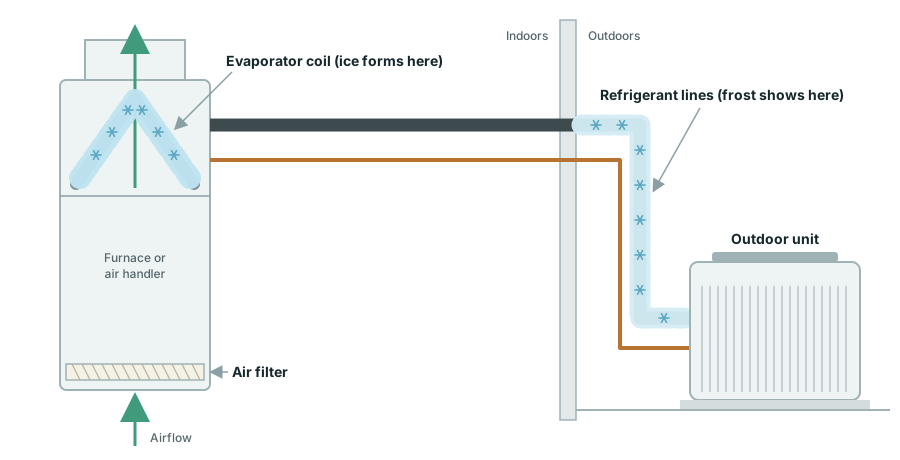
If you see ice on the indoor coil, frost on the copper refrigerant line outside, or the vents are blowing weak, warm air, the evaporator coil has frozen. Trane, Carrier and Lennox give the same first move: switch the thermostat from COOL to OFF, set the fan to ON and let the ice melt. Don't run cooling on a frozen coil and don't chip at the ice.
| Symptom | AC Freezing Up: Frozen Evaporator Coil or Ice on the Line Outside |
|---|---|
| Applies to | Split-system central air conditioners: an indoor evaporator coil on the furnace or air handler, and an outdoor condensing unit |
| Severity | Runs with warning |
| DIY | Check, then call — owner-level checks first, then a dealer |
| Last checked |
Key facts
| Question | Short answer | Source |
|---|---|---|
| First step | Thermostat from COOL to OFF | Trane, Carrier, Lennox |
| Fan setting while it thaws | ON (not AUTO) | Trane, Carrier, Lennox, American Standard |
| How long to thaw | Typically 1 to 4 hours; Carrier's page also gives 4–8 hours or longer for heavy ice | Carrier |
| Water to expect | 1–2 gallons if the coil is fully encased in ice | American Standard |
| Most common cause | Restricted airflow (dirty filter, blocked return vents) | Trane |
| Will it fix itself? | No | Carrier |
| Can I add refrigerant myself? | No. Recharging requires EPA Section 608 certification | EPA |
What to do right now
- Switch the thermostat from COOL to OFF. Trane says running the system with a frozen coil "can cause major damage to your air conditioning system." Carrier warns that ignoring the ice can lead to compressor damage or total system failure.
- Set the fan to ON. With cooling off, the blower pushes warm air across the coil to melt the ice faster (Trane, Carrier, Lennox, American Standard).
- Pull the air filter and look at it. If it's dirty, replace it (Lennox, Trane).
- Open and clear the vents. Make sure supply registers are open and return vents aren't blocked (Trane, Lennox).
- Watch for water. Melting ice can come off faster than the drain line can carry it, so check around the indoor unit and keep towels handy (Carrier, American Standard).
- Wait until the coil is fully clear. Carrier puts typical thaw time at 1 to 4 hours. Only then switch back to COOL.
What not to do
- Don't chip, scrape or pry at the ice. Trane: it "can damage the coil."
- Don't use a hair dryer, heat gun, space heater or hot water. Carrier says the rapid temperature change can crack or warp the coil.
- Don't keep cooling running to push through it. Carrier: never run an AC with frozen coils.
- Don't add refrigerant. Refrigerant for home AC systems is sold only to Section 608-certified technicians and the companies that employ them (EPA).
Why the coil freezes
Trane: "The biggest reason for an evaporator coil to freeze is restricted airflow." Check the causes roughly in this order. The first three are things you can see yourself.
- Dirty or clogged air filter. Trane, Carrier and Lennox all list it first. A clogged filter cuts airflow across the coil.
- Blocked or closed vents. Closed supply registers and blocked return grilles starve the coil of air (Trane, Lennox).
- Running cooling when it's cool outside. Lennox says running your AC when it's below 60°F outside can make it freeze up.
- Thermostat problems. A thermostat that doesn't shut cooling off as the house cools, often overnight, can let the coil ice (Trane).
- Dirty evaporator coil. Dust on the coil insulates it and restricts airflow. Trane recommends professional maintenance for it.
- Blower problems. A malfunctioning fan or blower motor can also cause icing (Carrier, Lennox).
- Low refrigerant (a leak). Low refrigerant drops the pressure in the coil, and the coil gets too cold and freezes (Carrier, Lennox). If it's low, EPA advises having the leak found and repaired instead of "topping it off."
If a new filter and open vents stop the icing, you've found the cause. If the coil ices again, see When to call a technician.
Ice on the copper line outside
Frost or ice on the outdoor refrigerant lines in summer is a sign the indoor coil is frozen, not a separate outdoor problem. American Standard lists "Visible icing on the outside refrigerant lines" among the signs of a frozen evaporator coil. The fix is the same: cooling OFF, fan ON, let it thaw, then find the cause above. Don't knock the ice off the pipe.
Heat pump in winter? American Standard says a heat pump's outdoor unit icing up in cold weather is normal. That's a different situation from a frozen indoor coil during cooling season.
Water while it thaws
A frozen coil melts into the drain pan under the indoor unit. If the coil was fully encased, American Standard estimates 1–2 gallons of water. Carrier explains why the AC can leak right after it's turned off: the ice melts faster than the drain line can handle. If water keeps leaking after the coil is clear, the condensate drain line may be clogged. That's a separate problem (Carrier).
When to call a technician
Call an HVAC technician if:
- The coil ices up again after you've replaced the filter and opened the vents. Lennox says that's the point to call a certified HVAC technician, and names refrigerant leaks, blower motor problems and a faulty thermostat as deeper causes behind some freeze-ups. Carrier's advice for the same situation is to contact a dealer.
- You suspect a refrigerant leak. Ask the technician to find and repair the leak rather than "topping it off." EPA recommends exactly that.
- The indoor coil itself is dirty. Cleaning it is a professional service item (Trane).
Tell the company the coil is frozen when you book. American Standard notes that a technician can't evaluate the coil and refrigerant lines until the coil has thawed. A technician's visit typically covers the filter, coil cleaning, thermostat checks, refrigerant level testing and leak detection (Trane).
Hiring tip from EPA: use a dealer whose technicians are EPA-certified to handle refrigerant, and ask to see the Section 608 certification card.
How to keep it from happening again
- Change the filter every 1–3 months (Trane).
- Keep supply and return vents open and clear (Trane, Lennox).
- Keep plants and landscaping at least two feet from the outdoor unit (Trane).
- Have the system serviced each spring. Trane recommends a spring service visit.
- Don't run cooling on cool days. Lennox says running it below 60°F outside can freeze the coil.
Window or portable unit iced over?
Room air conditioners freeze for the same airflow reasons, but the steps differ by unit. See Window AC not cooling, where ice on the indoor coil is cause 5, and Portable AC not cooling.
Sizing an AC for the room?Air Conditioner BTU Calculator The ENERGY STAR sizing table with its sun, people, and kitchen adjustments.Frequently asked questions
Can I run the AC with ice on the coil?
No. Trane and Carrier both say to switch cooling off. Running a frozen coil risks major damage, up to compressor failure.
Should the fan be ON or AUTO while it thaws?
ON. Trane, Carrier, Lennox and American Standard all say to set the fan to ON to speed thawing.
How long does a frozen AC coil take to thaw?
Typically 1 to 4 hours; Carrier's page also gives 4–8 hours or longer for heavy ice.
Why is the pipe outside my AC frozen?
Ice on the outdoor refrigerant line in summer usually means the indoor evaporator coil is frozen. American Standard lists it as one of the signs. Treat it the same way: cooling off, fan on, then find the cause.
Can I add refrigerant myself?
No. EPA says Section 608 certification is required to recharge appliances, and refrigerant for stationary systems is sold only to certified technicians or the companies that employ them.
Will a frozen AC fix itself?
No. Carrier says a frozen air conditioner will not fix itself and that ignoring the ice can lead to severe compressor damage.