Carrier Furnace Code 33: Limit Circuit Fault
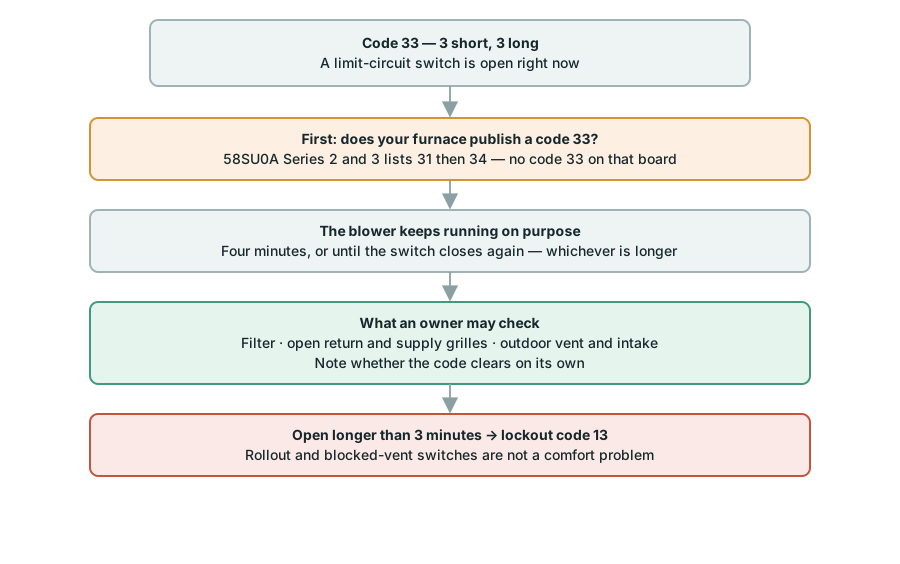
Code 33 — three short flashes, then three long — means a switch in the limit circuit is open right now, and the furnace is running its blower to clear the heat. It is the live fault, not the lockout. Carrier's 58CVA guide documents what happens next: the blower runs for four minutes or until the switch closes again, whichever is longer, and "if open longer than 3 minutes, code changes to lockout #13." Before you spend time on this code, check one thing: code 33 does not exist on every Carrier furnace. The 58SU0A Series 2 and 3 Ultra-Low-NOx control publishes 11, 12, 13, 14, 21, 22, 23, 24, 25, 31, 34 — it skips from 31 to 34, and a technician telling you there is no code 33 on your furnace may be reading the correct table for it.
| Code | 33 (Limit circuit fault) |
|---|---|
| Applies to | Carrier gas furnaces that publish a code 33 — 58CVA/58CVX, 58SC0A/58SC1A, 59MN7A and related families. Not present on the 58SU0A Series 2 & 3 Ultra-Low-NOx control |
| Severity | Runs with warning |
| DIY | Check, then call — owner-level checks first, then a dealer |
| Last checked |
Does my Carrier furnace even have a code 33?
Check the model before anything else, because this is the code where Carrier's families genuinely diverge. On the 58CVA, 58CVX, 58SC0A, 58SC1A and 59MN7A, code 33 is a documented limit circuit fault with a full description and check list. On the 58SU0A Series 2 and 3 Ultra-Low-NOx control it is simply absent from the published status code list (GFULN80-C-01TS, p. 6).
That absence is not an omission in the document. The list on that board runs 11, 12, 13, 14, 21, 22, 23, 24, 25, 31 and then 34, and its code 13 entry carries its own check list instead of the "refer to #33" cross-reference the other families use. On that control, the limit condition is reported as a lockout directly.
What does code 33 mean where it is documented?
It means a safety switch in the limit circuit has opened while the furnace was running, and the control is now clearing heat rather than latching off. The blower keeps going deliberately. What differs between families is which switches are in the loop and what else can set the code.
| Furnace family | Carrier's documented wording | Source |
|---|---|---|
| 58CVA / 58CVX | "Indicates the limit, draft safeguard, flame rollout, or blocked vent switch (if used) is open or the furnace is operating in high−heat only mode due to 2 successive low heat limit trips. Blower will run for 4 minutes or until open switch remakes whichever is longer. If open longer than 3 minutes, code changes to lockout #13." | TG-GFC80-02, p. 7 |
| 58SC0A / 58SC1A | "Indicates the limit, draft safeguard, flame rollout, or blocked vent shutoff switch (if used) is open. Blower will run for 4 minutes or until open switch remakes whichever is longer. If open longer than 3 minutes, code changes to lockout #13. Flame rollout switch and BVSS requires manual reset." | 58SC0A-05SI, p. 37 |
| 59MN7A Series 100 | Limit circuit fault; the furnace may also be running in maximum-heat only mode after two successive limit trips at lower firing rates. | 59MN7A-01T, p. 8 |
| 58SU0A Series 2 & 3 | No code 33. The published list goes from 31 to 34. | GFULN80-C-01TS, p. 6 |
Note the 58CVA and 59MN7A entries: on those furnaces code 33 can also mean the control has dropped into a high-heat-only mode after two successive limit trips at a lower firing rate. The furnace is still heating, but it has changed how it runs, and the code is telling you so.
What does the four-minute blower run mean?
It is the control protecting the heat exchanger. When a limit switch opens, heat is already in the furnace with nowhere to go, so the blower keeps moving air across it for four minutes or until the switch closes again — whichever takes longer, in Carrier's wording. A blower that runs on after the burners stop is doing its job here, not malfunctioning.
The three-minute figure is the separate one to watch. If the switch has not closed again within three minutes, the control stops treating this as a recoverable fault and latches code 13. So a furnace that shows 33 and recovers has cleared its own heat; one that shows 33 and then 13 could not.
What can I check while the code is showing?
Code 33 is usually about airflow, and airflow is where Carrier's owner documentation gives a homeowner something real to do. All of these are outside the furnace cabinet.
- Record the code first. Carrier asks owners to note the LED status code before removing the blower access door or cutting 115 V power, because on some boards the stored code does not survive a power interruption.
- Pull the filter and look at it. Carrier's guidance is to check the filter every four weeks and replace or clean it if needed. A filter that daylight barely passes through is enough on its own to open a limit switch.
- Walk the house and open the registers. Carrier's owner-level airflow instruction is to check for blocked return-air or supply-air grilles and ensure they are open and unobstructed. Closed vents in unused rooms concentrate heat in the ones left open.
- Check the outdoor vent and combustion-air intake for blockage, which Carrier's manual asks owners to do from outside the house.
- Notice whether the code clears. If the furnace recovers and runs normally afterwards, tell the technician that — a limit circuit that opens and recloses points somewhere different from one that stays open.
What this page will not tell you to do
Carrier's own check lists for code 33 include items like a loose blower wheel, a defective blower motor or capacitor, improper gas input adjustment, and a misaligned limit shield. Those appear in service literature written for technicians, and they involve opening the furnace and working on gas and electrical components.
The 58SC0A entry also notes that the flame rollout switch and blocked vent shutoff switch "requires manual reset" — a statement about how those devices behave, not an instruction to a homeowner. Carrier's owner's manuals describe pressing a manual reset button at most once, on the specific furnaces those manuals cover, and stop the process immediately if the switch trips again.
When to call a technician
- Code 33 turns into code 13, or keeps coming back after a filter change and open registers.
- The furnace has dropped into high-heat or maximum-heat only mode, which on some families is part of what code 33 reports.
- The blower runs constantly, or the furnace short-cycles between the code and normal operation.
- The flame rollout switch has tripped — that switch exists because flame left the burner box, and it is not a comfort problem.
- Anything visible in the vent or around the burners: soot, rust, scale, a disconnected pipe. Carrier's instruction there is to stop operating the furnace.
CPSC recommends a yearly professional inspection of every fuel-burning heating system, and a furnace that has started tripping its limit circuit is a good reason not to skip the current season's.
Related Carrier codes
The lockout this code becomes is code 13. The ignition side of the same furnace uses code 34 for the live fault and code 14 for its lockout. Every documented code, including the ones without a page here, is listed on the Carrier furnace error codes hub.
Frequently asked questions
Why does my technician say there is no Carrier code 33?
They may be reading the right table for your furnace. Carrier's 58SU0A Series 2 and 3 Ultra-Low-NOx control publishes no code 33 at all — its list runs from 31 straight to 34, and the limit condition is reported as code 13 instead.
Is code 33 serious if the furnace still runs?
It is a warning rather than a lockout, but the switches in that circuit include flame rollout and blocked vent devices on several families. A furnace that keeps setting code 33 is repeatedly reaching a condition its safety devices exist to stop.
Why does the blower keep running on code 33?
By design. Carrier documents the blower running for four minutes or until the open switch closes again, whichever is longer, to move heat out of the furnace. It is the control protecting the heat exchanger, not a stuck blower.
Can a dirty filter cause Carrier code 33?
It is one of the documented causes on the families that publish this code, and it is the one a homeowner can check. Restricted airflow lets heat build up until a limit switch opens. A clean filter does not rule out other causes.
How long before code 33 becomes code 13?
Three minutes of the limit circuit staying open, on the families that document the transition. On the 58CVA the code can also latch to 13 after ten successive limit trips during high heat, without one continuous three-minute opening.